Turn your ergonomic challenges into measurable gains.
At Entrac, we understand that telecommunications is an industry governed by the CRTC where service continuity is absolute and safety is non-negotiable. Your organization faces strict requirements for security, service continuity and cybersecurity. You also manage very diverse employment realities: field employees (telecom technicians, line workers, cable splicers, network-maintenance technicians), network and IT employees, and customer-service employees. In a context where every technical trade is specialized and an injury can compromise the quality and speed of service, protecting your employees means protecting your delivery capacity and your customers’ satisfaction.
We’re here to help you tackle your challenges in ergonomics and MSD prevention, adapted to your realities for both technical roles and administrative staff. Our services, training and strategic advice give you the tools to act at every level, within requirements for security, continuity and cybersecurity. We are a 100% impartial and objective partner; we do not sell tools or equipment. Our recommendations are guided solely by data and your results.
In a sector where service continuity is absolute, technical trades are specialized and security requirements are strict, managing ergonomic risk is not an option: it’s a lever for operational performance and service quality.
How we help companies in the telecommunications industry
Our ergonomics services, training and technology solutions support telecommunications companies from strategic direction to operational execution, with targeted actions according to each person’s responsibilities.
Management
We support management in structuring the prevention plan, aligning priorities with service-continuity objectives and making decisions based on measurable indicators to reduce absenteeism-related costs, maintain the quality and speed of service, and retain specialized technical trades in a competitive market.
Operations and field technical trades
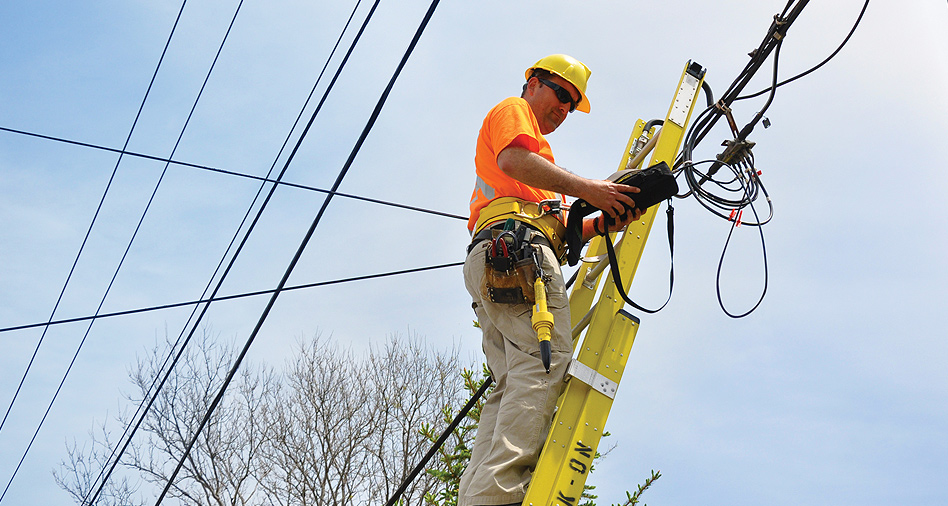
We help operations teams, telecom technicians, line workers, cable splicers and network-maintenance technicians to reduce exposure to ergonomic risks: awkward postures, handling and gripping effort, driving, outdoor work and environmental constraints. We optimize work methods and equipment and offer training to improve comfort, reduce injuries and sustain performance in demanding environments.
Network, IT, engineering and customer service
We help engineers, network architects, analysts, customer-service agents and technical-support teams to reduce exposure to ergonomic risks: prolonged postures, repeated effort and screen work in a multitasking context. We work on workstation layout, office equipment and postural health, and offer training to improve comfort, reduce presenteeism and sustain performance during peak periods.
Occupational health and safety — OHS
We equip prevention specialists and OHS advisors in implementing a prevention plan adapted to your reality. We do this through objective ergonomic risk assessments, targeted training and interventions that respect security and cybersecurity requirements.
Human resources — HR
We help human resources teams and administrative staff prevent and reduce MSD-related absenteeism (back, shoulders, neck, arms, wrists), maintain a qualified workforce in specialized technical trades and integrate new employees. Our interventions help retain talent and ensure service continuity.
All this, to ensure reliable operations, service continuity and the quality of service to your customers.

Why Entrac in the telecommunications industry
The #1 experience in workplace ergonomics in Quebec. Since 1995: more than 234,700 workers trained, more than 51,800 workstations now ergonomic, more than 1,000 clients. We know what to do, when to do it, how to do it and why.
100% impartial — no equipment sales, no supplier commissions. Our recommendations are guided solely by data and your results.
A multidisciplinary team, trained to deliver the same quality every time. CCPE-certified ergonomists, CHRAs, kinesiologists and learning specialists — all trained through the Entrac Academy, our rigorous internal training process.
Your industry’s benchmarks — to strengthen your plan and your program. We share the real-world results of the top-performing companies in your industry to enrich and validate your choices.
A structured, documented approach — compliant with Bill 27. Every intervention is traceable, measurable and backed by evidence you can confidently share with your stakeholders.
More than 95% of clients recommend us to their colleagues.
Entrac is the partner of organizations where error is not an option.